In the world of global aviation, geography is destiny. Countries located at natural crossroads of continents often become critical players in international air travel, cargo movement, and airline operations. Pakistan is one such country. Positioned at the junction of South Asia, Central Asia, the Middle East, East Asia, and Europe, Pakistan’s geographic location gives it immense strategic value in global aviation.
According to international aviation route planning principles by ICAO, airspace location plays a vital role in determining flight efficiency and global connectivity. Pakistan’s airspace supports some of the busiest Asia–Europe and Asia–Middle East routes, making it a key aviation corridor.
Over the decades, airlines and logistics companies have increasingly recognized Pakistan’s importance as a natural air bridge connecting major economic regions.
Pakistan’s Position Along Key Global Air Corridors
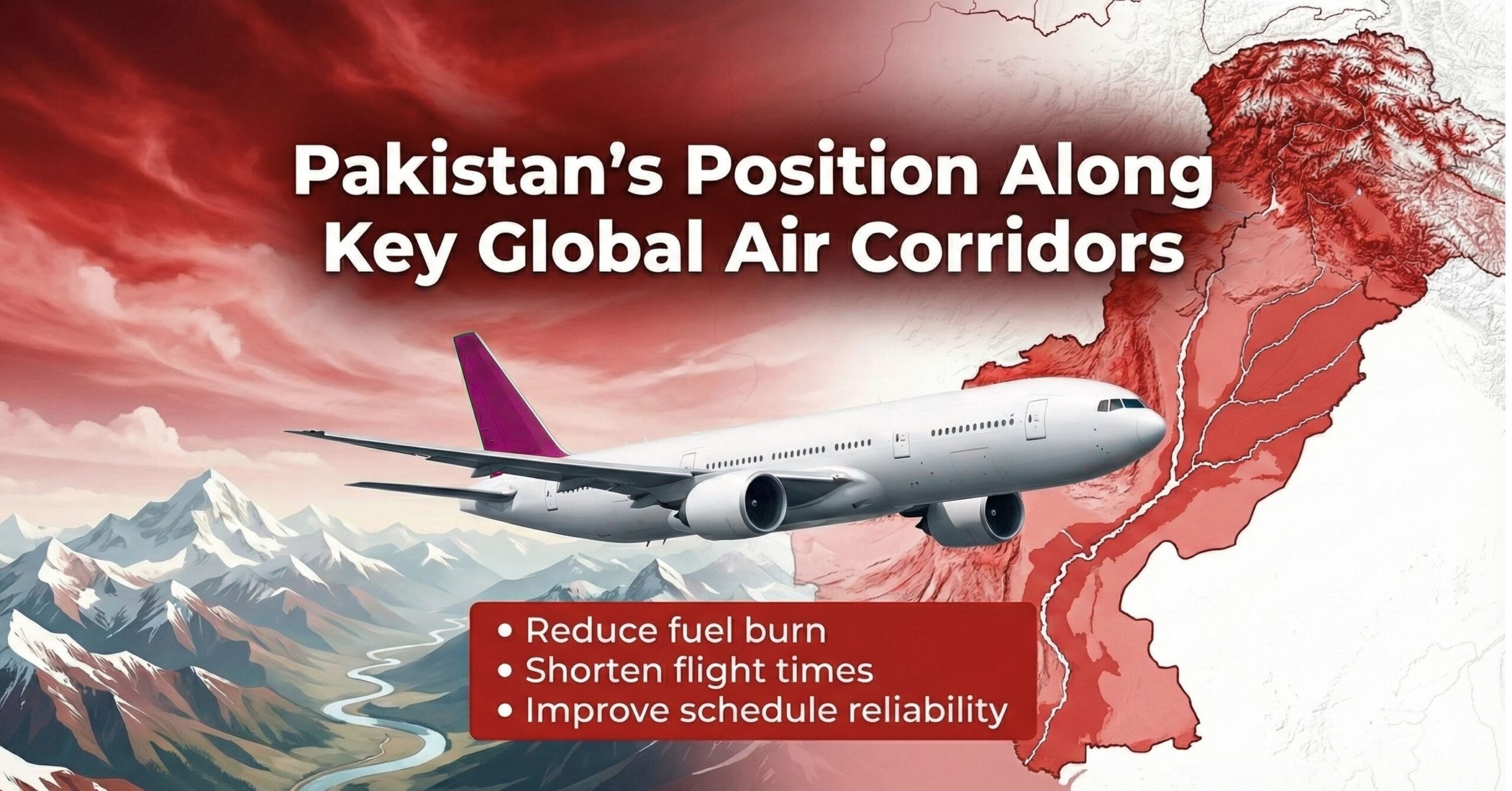
Pakistan lies directly along major Asia–Europe and East Asia–Middle East air corridors. Flights traveling between China, Southeast Asia, and Europe frequently pass through Pakistani airspace to optimize distance and fuel usage.
The IATA global connectivity framework highlights Pakistan as part of an important transcontinental aviation pathway.
These routes help airlines:
- Reduce fuel burn
- Shorten flight times
- Improve schedule reliability
Proximity to Major Regions
Middle East
Pakistan’s close proximity to the Middle East strengthens aviation ties with global hubs such as Dubai, Doha, and Riyadh. Gulf carriers rely heavily on Pakistan for both passenger and cargo traffic.
We provide end-to-end Air Cargo Logistics Solutions that facilitate seamless movement between the Gulf and South Asia.
You can internally link this section to your earlier blog on aviation hubs.
Central Asia
Central Asian countries depend on transit routes for global access. Pakistan offers a southern aviation gateway, enabling smoother cargo and passenger movement.
Pakistan’s strategic relevance is often discussed in regional connectivity and CPEC logistics studies.
East Asia
Flights from East Asia to Europe and the Middle East frequently use Pakistani airspace. This strengthens Pakistan’s role in global supply chains, especially for electronics and industrial goods.
Europe
Pakistan lies along the shortest great-circle routes connecting Europe with South and East Asia. This makes it operationally attractive for long-haul airlines.
Why Airlines Benefit From Pakistan as a Midpoint

Pakistan’s central positioning allows airlines to plan efficient long-haul operations. According to airline operational planning guidelines, midpoints reduce fuel load requirements and enhance aircraft utilization.
Pakistan’s airports also support technical landings, emergency diversions, and refueling operations.
For airlines planning mid-continent stops, our technical stop & ground handling services ensure a quick turnaround and efficient fuel uplift at all major Pakistani airports.
Strategic Role in Cargo & Logistics Networks
Pakistan is increasingly relevant in global air cargo networks connecting China, the Middle East, and Europe. Karachi and Lahore play a vital role in handling textiles, perishables, and pharmaceuticals.
The Pakistan Civil Aviation Authority (PCAA) provides data on cargo traffic growth and infrastructure development.
Geopolitical Importance for Aviation
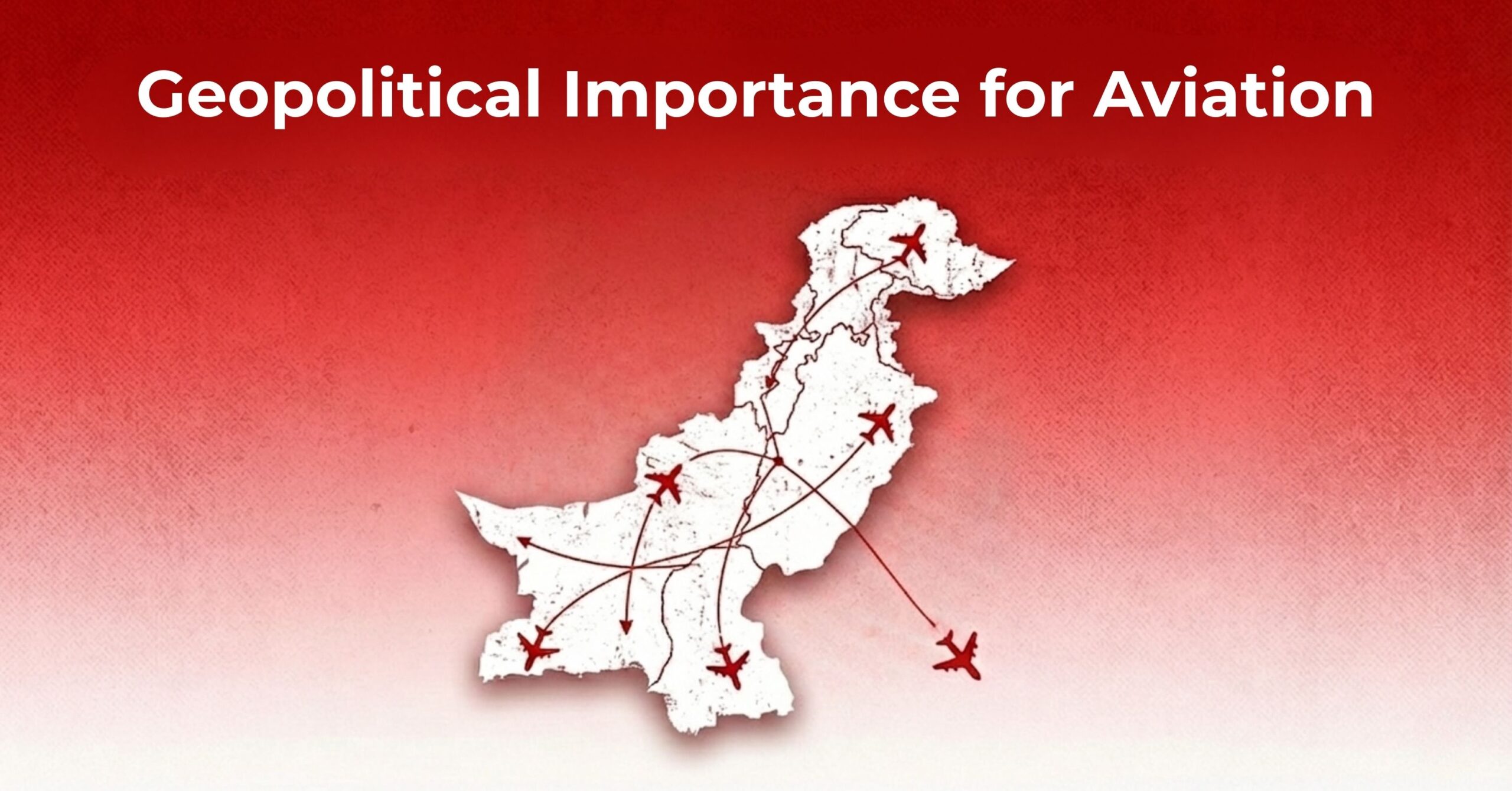
Airspace access is deeply influenced by geopolitics. Pakistan’s stable air traffic management makes it a reliable alternative routing option during regional disruptions.
Infrastructure Supporting Pakistan’s Strategic Position
Pakistan has invested in modern airports and air traffic systems to capitalize on its location. Facilities like Islamabad International Airport are designed for high-capacity international operations.
Opportunities for Charter, Cargo & Technical Stops
Pakistan’s geographic advantage creates opportunities for:
These services enhance Pakistan’s aviation revenue potential and global relevance.
Final Thoughts
Pakistan’s strategic geographic location makes it a vital component of global aviation. From transcontinental air routes to cargo logistics and geopolitical airspace management, Pakistan serves as a bridge between East and West.
With continued infrastructure development and policy alignment with ICAO and IATA standards, Pakistan can further strengthen its position as a regional aviation hub.
Frequently Asked Questions
Why is Pakistan’s airspace considered a strategic aviation corridor?
Pakistan is located at the crossroads of South Asia, Central Asia, and the Middle East. It serves as a natural bridge for the busiest Asia-Europe and Asia-Middle East flight paths. By flying through Pakistani airspace, airlines can follow the most direct routes, significantly reducing fuel consumption and flight duration.
How do airlines benefit from using Pakistan as a technical stop?
Pakistan’s airports, such as Karachi, Lahore, and Islamabad, are perfectly positioned for long-haul technical stops. These locations allow for efficient refueling, crew changes, and emergency diversions, enabling airlines to maximize their aircraft utilization and reduce the weight of fuel carried from the origin.
What role does Pakistan play in global cargo logistics?
As a midpoint between the manufacturing hubs of East Asia and the consumer markets of Europe and the Gulf, Pakistan is a vital transit point for air cargo. It handles a high volume of textiles, pharmaceuticals, and electronics, supported by infrastructure that meets ICAO and IATA standards.
Which international air routes depend most on Pakistan’s location?
The “Asia-Europe” corridor and “East Asia-Middle East” routes are the most dependent. Flights traveling from hubs like Beijing, Bangkok, or Singapore toward London, Paris, or Dubai frequently utilize Pakistani airspace to maintain schedule reliability and cost efficiency.
How does Aeroworld support operations in this strategic region?
Aeroworld leverages Pakistan’s geographic advantage by providing end-to-end flight support, including ground handling, fueling, and overflight permits. We ensure that international operators can navigate this critical corridor with absolute operational certainty and minimal turnaround times.
Optimize Your Global Routes Today!
Harness the strategic power of Pakistan’s aviation corridor. Contact Aeroworld for expert ground handling, refueling, and flight support tailored to your international mission.
Consult Our Global Team