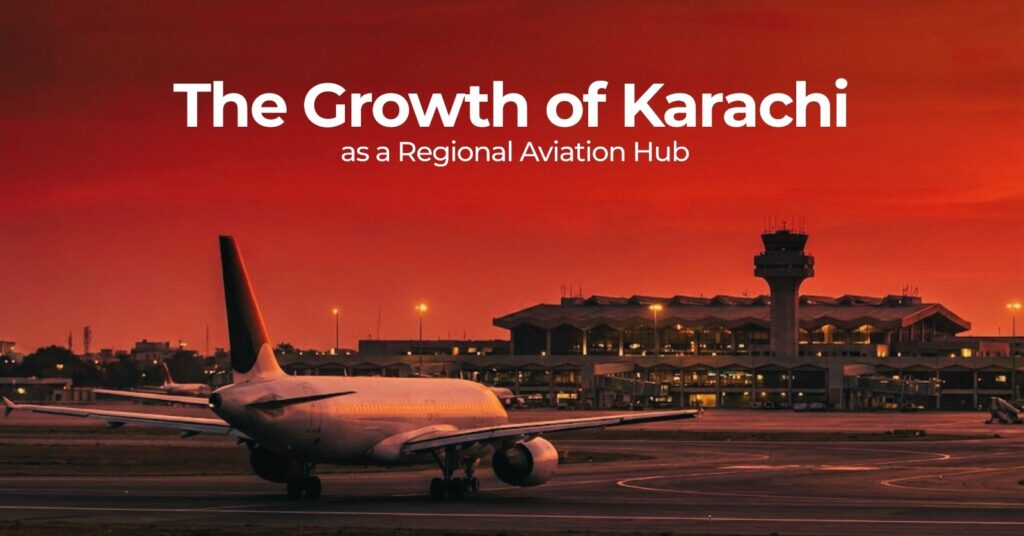
Karachi has long been recognized as Pakistan’s financial and commercial capital, but in recent years, it has also emerged as a key regional aviation hub in South Asia and the Middle East Central Asia corridor. With its strategic coastal location, expanding airport infrastructure, and growing cargo and charter activity, Karachi is increasingly becoming a preferred gateway for airlines, logistics operators, and international aviation stakeholders.
As regional air connectivity continues to expand, Karachi’s aviation ecosystem is playing a crucial role in linking South Asia with the Middle East, Africa, and beyond.
Karachi’s primary international gateway, Jinnah International Airport, serves millions of passengers annually and functions as one of South Asia’s busiest aviation nodes.
Why Karachi Holds Strategic Importance in Regional Aviation
The Pakistan Civil Aviation Authority oversees airport safety, operations, and compliance standards across the country
Karachi’s aviation importance is deeply rooted in its geographic, economic, and operational advantages.
Located along the Arabian Sea, Karachi sits at the crossroads of major international air routes connecting:
- South Asia
- The Middle East
- Central Asia
- East Africa
This positioning allows airlines to operate efficient flight paths with reduced fuel consumption and optimized routing. For regional operators, Karachi serves as a practical stopover, technical landing point, and cargo transit hub.
Additionally, Karachi hosts Pakistan’s largest industrial base, major seaports, and corporate headquarters creating consistent demand for passenger, cargo, and charter operations.
Evolution of Jinnah International Airport (KHI)
Jinnah International Airport (KHI) has undergone significant transformation to meet rising regional aviation demands.
Expansion of Facilities
Over the past decade, KHI has seen continuous upgrades, including:
- Modernized passenger terminals
- Improved runway and taxiway systems
- Enhanced air traffic management capabilities
- Upgraded safety and security infrastructure
These developments have strengthened the airport’s ability to handle simultaneous domestic and international operations, improving overall efficiency and reliability.
International Traffic Trends
Karachi remains one of Pakistan’s busiest international airports, serving:
- Gulf carriers
- South Asian airlines
- European and East Asian connections
The city’s strong diaspora links, business travel demand, and transit passengers have contributed to stable international traffic growth. Karachi is often used as an entry and exit point for travelers moving between Pakistan and global markets.
According to PCAA traffic reports, passenger and cargo volumes at Karachi’s airport have shown measurable year‑on‑year growth
Cargo Capacity Improvements
Cargo handling has been one of the most notable areas of expansion at KHI. Key improvements include:
- Dedicated cargo terminals
- Cold storage and perishable handling facilities
- Faster customs clearance processes
These enhancements have positioned Karachi as a preferred cargo hub for pharmaceuticals, textiles, seafood, and industrial goods.

Growth Drivers Behind Karachi’s Aviation Rise
The launch of new carriers like Air Karachi reflects growing private investment and confidence in Pakistan’s aviation market, which supports Karachi’s development as a regional aviation hub.
Geographic Advantage
Karachi’s coastal location allows seamless integration between air, sea, and land transport. This multimodal connectivity is highly attractive for logistics companies seeking faster transit times and reduced operational costs.
Trade and Logistics Activity
As Pakistan’s largest trade center, Karachi handles a significant portion of the country’s imports and exports. The close proximity of:
- Karachi Port
- Port Qasim
- Industrial zones
creates a strong demand for air cargo, charter flights, and business aviation services.
CPEC and Economic Development
The China-Pakistan Economic Corridor (CPEC) has further elevated Karachi’s strategic relevance. Increased infrastructure investment and trade flows have:
- Boosted cargo movement
- Encouraged foreign airline interest
- Expanded regional connectivity
Aviation plays a supporting role in facilitating faster business travel and time-sensitive logistics related to CPEC linked projects.
How Karachi Supports Cargo & Charter Operations
Karachi has become a key operational base for cargo and charter aviation, both domestically and regionally.
Cargo Operations
Cargo airlines and freight forwarders favor Karachi due to:
- 24/7 airport operations
- High cargo handling capacity
- Access to international shipping routes
The airport supports scheduled freighters, ad-hoc charter cargo flights, and humanitarian or relief operations especially during emergencies.
Charter and Business Aviation
Karachi also supports:
- Private jets
- Diplomatic flights
- Corporate and energy-sector charters
Its operational flexibility, technical support services, and maintenance facilities make it a reliable stop for non-scheduled aviation activities.
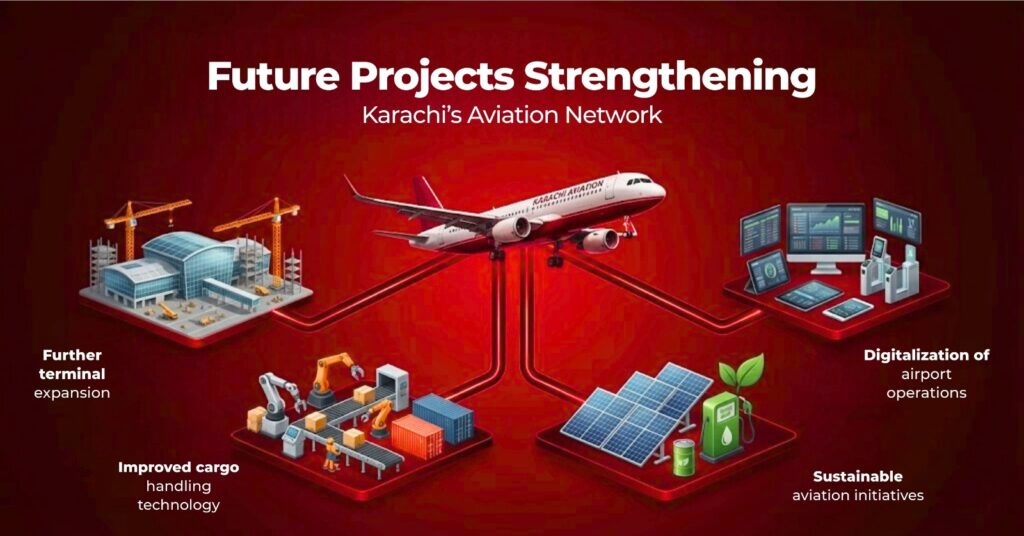
Future Projects Strengthening Karachi’s Aviation Network
Innovations like the digitalization of air cargo handling and passenger movement systems at Karachi’s airport will further streamline operations, aligning with global aviation standards.
Several upcoming and proposed initiatives are expected to further enhance Karachi’s regional hub status.
Key focus areas include:
- Further terminal expansion
- Digitalization of airport operations
- Improved cargo handling technology
- Sustainable aviation initiatives
There is also growing emphasis on aligning airport development with international aviation standards, making Karachi more competitive within the region.
What This Means for Regional Operators
For airlines, charter operators, and logistics companies, Karachi offers:
- Strategic route optimization
- Strong passenger and cargo demand
- Reliable infrastructure for technical and operational support
Regional operators can leverage Karachi as:
- A cargo consolidation hub
- A charter operations base
- A technical stop for long-haul routes
As air connectivity in South Asia continues to grow, Karachi’s role as a regional aviation gateway is expected to expand further.
Final Thoughts
The growth of Karachi as a regional aviation hub is not accidental; it is the result of strategic location, infrastructure development, economic activity, and increasing global connectivity. With continued investment and regulatory support, Karachi is well-positioned to strengthen its standing in regional and international aviation networks.
As Pakistan’s aviation sector evolves, Karachi will remain at the center of cargo operations, charter activity, and regional air connectivity bridging markets and supporting economic growth across the region.