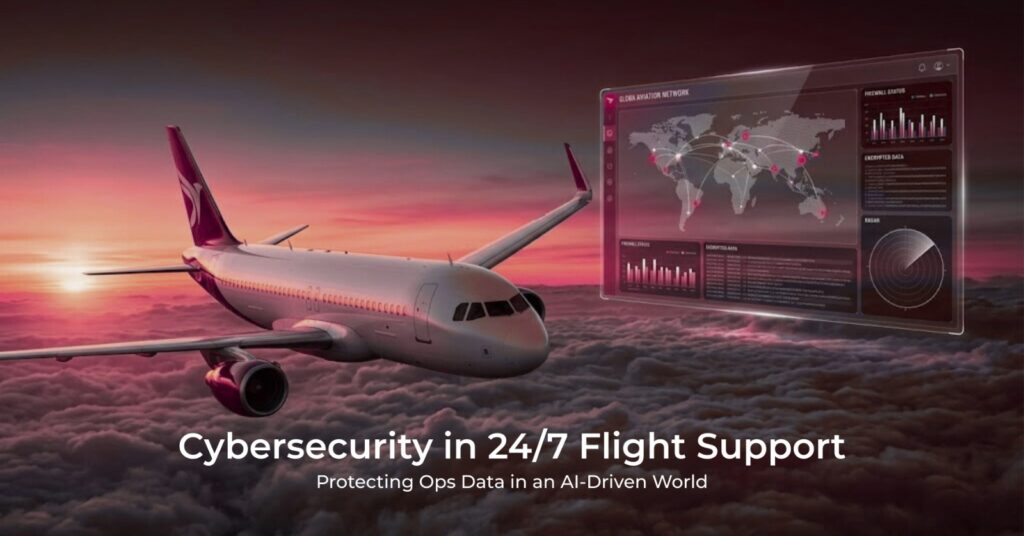
Modern aviation operations no longer rely solely on aircraft performance and pilot expertise. Today, flight operations and 24/7 flight support depend heavily on interconnected digital systems that work continuously across time zones. Flight planning platforms, permit coordination systems, ground handling tools, fueling arrangements, crew scheduling software, and operational communication networks all run in real time to keep aircraft moving safely and efficiently.
A single international flight may involve dozens of digital interactions before departure route optimization, slot approvals, weather data integration, regulatory filings, payment authorizations, and coordination with airports and service providers worldwide. These processes operate around the clock, forming a digital backbone that enables global aviation.
Historically, aviation treated physical safety as the industry’s primary non-negotiable priority. Aircraft maintenance, pilot training, and operational procedures were designed to eliminate risk wherever possible. Today, however, a new category of risk has emerged: cyber security.
Unlike mechanical failures, cyber threats are often invisible. An attacker does not need physical access to an aircraft to disrupt operations. Manipulated flight data, locked planning systems, or compromised operational communications can delay flights, ground aircraft, expose sensitive information, or disrupt entire networks without touching a runway.
As aviation organizations accelerate digital transformation and adopt automation and artificial intelligence, cyber exposure continues to grow. Industry regulators and global aviation bodies increasingly emphasize cyber resilience as a core operational requirement rather than an IT concern, as outlined in aviation cyber security best practices by IATA. Cyber incidents now carry measurable financial, operational, and reputational consequences sometimes costing organizations millions through disruption, recovery efforts, and loss of trust.
This guide explains:
- What aviation cyber security means within daily flight operations
- Why 24/7 flight support environments face unique cyber risks
- Common vulnerabilities affecting aviation operations teams
- Practical strategies to protect operational data in an AI-driven world
What Is Aviation Cyber Security in 24/7 Flight Support?
Clear Definitions
Aviation cyber security refers to protecting aviation systems, digital infrastructure, and operational data from unauthorized access, disruption, manipulation, or theft. This includes:
- Airline operational systems
- Airport infrastructure
- Air traffic management platforms
- Ground handling coordination tools
- Flight support and dispatch systems
Operations data (Ops Data) includes all information required to plan and execute flights:
- Flight plans and routing
- Overflight and landing permits
- Airport slots
- Crew rosters
- Ground handling instructions
- Fuel releases
- Passenger or cargo manifests
- Billing and payment instructions
24/7 flight support describes continuous operational coordination services that assist aircraft before, during, and after flights across multiple regions and time zones.
Why This Matters
1. Data Integrity Equals Operational Safety
If flight plans or permits are delayed, altered, or inaccessible, operations can slow or halt entirely. Even small data disruptions may create safety-relevant consequences because aviation relies on accurate, synchronized information.
2. Operational Continuity
Cyber incidents can block access to systems or communication channels. When dispatchers cannot access planning platforms or coordinate with airports, flights may face:
- Delays
- Diversions
- Ground holds
- Cascading schedule disruptions
3. Regulatory Expectations and Trust
Aviation authorities increasingly expect structured cyber risk management. Airlines and operators also assess cyber maturity when selecting flight support partners.
A simple way to understand this:
Think of a 24/7 operations center as the brain of aviation operations. If attackers confuse or block the signals, the entire body stops functioning even though the aircraft itself is unaffected.
Aviation authorities worldwide increasingly emphasize cyber resilience as part of operational safety frameworks, with regulators such as the European Union Aviation Safety Agency (EASA) highlighting cybersecurity as a critical component of modern aviation systems.
How to Assess Cyber Risk in Your Flight Support Operations
Cyber resilience begins with understanding where risk exists.
Step 1 – Identify Critical Systems and Data
Start by mapping the systems essential to continuous operations:
- Flight planning software
- Permit and slot management tools
- Fuel coordination platforms
- Ground handling communication systems
- Finance and billing applications
Then identify sensitive data within each system:
- Routes and schedules
- Crew information
- Customer details
- Payment data
- Operational communications
This exercise reveals where cyber disruption would hurt most.
Step 2 – Map Access and Dependencies
Determine who can access each system:
- Operations staff
- Dispatchers
- Finance teams
- IT administrators
- Ground handlers
- Fuel providers
- External partners
Also document dependencies such as:
- Cloud providers
- Third-party software
- Remote access tools
- Weather and NOTAM data feeds
Modern aviation ecosystems are highly interconnected, meaning vulnerabilities often originate outside the organization.
Step 3 – Evaluate Likely Threats and Impact
Common aviation cyber threats include:
- Phishing attacks targeting operations staff
- Ransomware affecting planning systems
- Compromised remote access accounts
- Third-party software breaches
Organizations should estimate operational impact if systems fail for several hours or days:
- Missed departures
- Manual operational workarounds
- Customer disruption
- Financial penalties
Why Operations Are Exposed: Common, Preventable Cyber Weaknesses
Aviation organizations are increasingly targeted as digital systems expand across operations, with research highlighting the growing cyber threats in aviation operations and the need for stronger cyber resilience across flight support environments.
1. Weak Identity and Access Controls
Shared accounts and weak passwords remain widespread in operations environments. Without strong authentication:
- Attackers move laterally across systems
- Former staff may retain access
- Sensitive data becomes exposed
Multi-factor authentication is still missing in many operational platforms.
2. Fragmented Tools and Shadow IT
Operations teams often use multiple disconnected tools for planning, permits, and communications. This creates inconsistent security visibility.
Additionally, informal communication through personal messaging apps or unsecured email bypasses monitoring and audit trails.
3. Third-Party and Supply Chain Risk
Aviation operations rely heavily on external partners such as ground handlers and airport service providers, making cyber security for ground handling and airport operations a critical part of overall aviation resilience.
Flight support depends heavily on external partners:
- Ground handlers
- IT vendors
- Fuel suppliers
- Payment processors
A smaller partner with weak security controls can become an entry point into critical systems.
4. Limited Preparedness for Cyber Incidents
Many organizations lack tested incident response procedures. During a live cyber incident, teams may not know:
- Who makes decisions
- How communication continues
- Which manual procedures replace digital workflows
Time lost during confusion increases disruption.
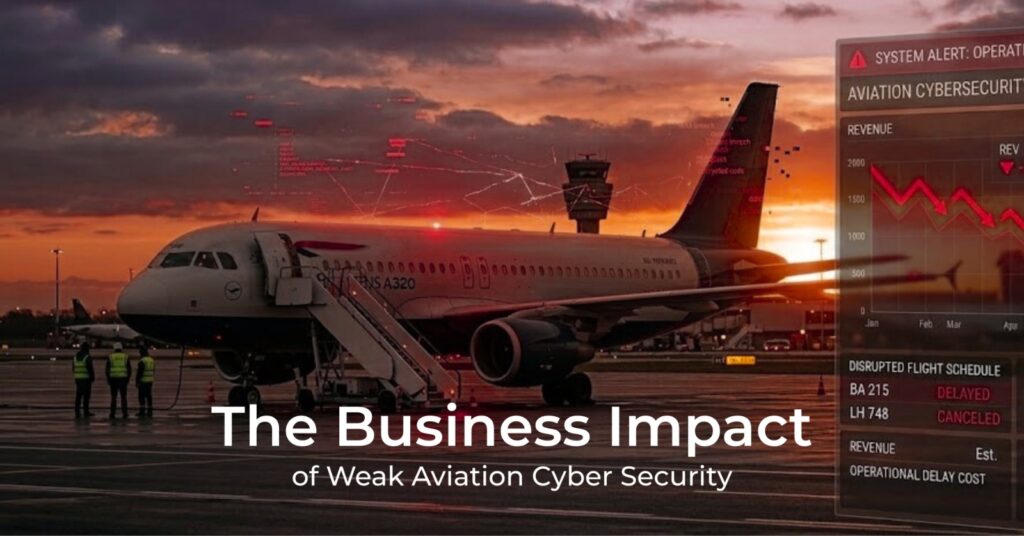
The Business Impact of Weak Aviation Cyber Security
Operational Disruption and Financial Loss
Ransomware or outages affecting planning or coordination tools can halt departures. Consequences include:
- Diversions
- Rebooking costs
- Overtime expenses
- Lost revenue
- Operational backlog
Even short disruptions can cascade across global schedules.
Regulatory Exposure and Contract Risk
Failure to meet cyber security expectations can lead to regulatory scrutiny or contractual disadvantages. Airlines increasingly evaluate cyber resilience when choosing service providers.
Reputation and Trust
Aviation depends on reliability. Public cyber incidents raise concerns about data protection and operational competence.
Trust once lost is difficult to rebuild.
7 Strategies to Strengthen Cybersecurity in Flight Support Operations
Below are practical strategies combining operational discipline with modern technology and AI support.
1. Measure and Monitor Cyber Risk Regularly
Explanation:
You cannot protect what you do not measure.
Implementation Steps:
- Create a cyber risk register aligned with aviation operations
- Track critical systems and risks
- Review monthly or quarterly with operations leadership
AI Support:
Automated dashboards collect logs and show risk trends without manual reporting.
2. Strengthen Identity and Access Management
Explanation:
Identity security is the foundation of aviation cyber security.
Implementation Steps:
- Enable multi-factor authentication (MFA)
- Remove shared accounts
- Apply role-based access permissions
- Conduct regular access reviews
AI Support:
Behavior-analysis tools detect unusual login patterns and trigger additional verification.
3. Secure Remote Access and Data Transfers
Explanation:
24/7 operations require remote connectivity but unsecured access introduces risk.
Implementation Steps:
- Use encrypted connections
- Restrict access to trusted devices
- Modernize legacy VPN solutions
- Monitor remote sessions
AI Support:
Zero-Trust systems continuously validate users and devices before granting access.
4. Improve Visibility and Real-Time Detection
Explanation:
Early detection prevents minor incidents from becoming operational crises.
Implementation Steps:
- Centralize logs from operational systems
- Configure alerts for suspicious activity
- Monitor privilege changes and data exports
AI Support:
AI analytics learn normal behavior and flag anomalies automatically.
5. Train Ops and Ground Teams on Cyber Hygiene
Explanation:
Humans remain the most targeted attack surface.
Implementation Steps:
- Provide short scenario-based training
- Teach phishing recognition
- Promote secure handling of operational data
AI Support:
Automated phishing simulations track employee improvement over time.
6. Build and Test an Incident Response Plan
Explanation:
Preparation reduces chaos during real incidents.
Implementation Steps:
- Define roles and responsibilities
- Establish communication procedures
- Develop manual fallback workflows
- Conduct simulations
AI Support:
Security platforms can isolate compromised devices automatically while teams respond strategically.
7. Embed Cyber Requirements into Vendor and Partner Management
Explanation:
Security is only as strong as the weakest partner.
Implementation Steps:
- Include cyber requirements in contracts
- Request security certifications or policies
- Define incident reporting expectations
AI Support:
Vendor-risk platforms track partner compliance automatically.
Practical Tips for Building a Cyber-Resilient Flight Support Program
Organizations can strengthen cyber resilience by aligning operational practices with global aviation safety guidance published by the International Air Transport Association (IATA), which emphasizes risk management, operational continuity, and industry collaboration.
Organizations can start small while achieving meaningful improvements:
- Review incidents and near-misses from the past 12–24 months
- Identify the top operational cyber risks
- Pilot 2–3 high-impact controls such as MFA and monitoring
- Assign shared ownership between operations and IT teams
Cyber security succeeds when it becomes an operational responsibility not just a technical function.
How Automation and AI Help Protect Ops Data (Without Slowing Teams Down)
Artificial intelligence enhances human decision-making rather than replacing it.
AI Monitoring and Alerting
AI systems analyze thousands of operational events simultaneously and highlight unusual patterns for human review.
Automated Protection and Recovery
Automation can enforce access policies instantly and isolate risky sessions faster than manual intervention.
Data-Driven Risk Insights
Analytics reveal which systems, users, or connections carry higher risk, helping leaders prioritize investments intelligently.
FAQs About Aviation Cyber Security and Flight Support
- What is aviation cyber security and how is it different from general IT security?
It focuses specifically on protecting operational systems where data integrity directly affects flight safety and continuity.
- Which operations systems are most critical to protect?
Flight planning, permits, dispatch communication platforms, crew systems, and financial transaction tools.
- How often should cyber security posture be reviewed?
At minimum quarterly, with continuous monitoring in place.
- Can smaller operators implement strong cyber security controls?
Yes. Many effective controls MFA, training, monitoring are affordable and scalable.
Conclusion
Cybersecurity has become a core operational pillar of modern aviation. In a world where flight support runs continuously across digital platforms, protecting operational data is essential for maintaining reliability, safety, and trust.
For organizations providing 24/7 flight support, cyber resilience is no longer optional. It is one of the fastest and most effective ways to safeguard operational continuity, revenue, and reputation.
The most effective approach is incremental:
- Measure risks clearly
- Implement a few high-impact controls first
- Build repeatable processes
- Use automation and AI to scale protection
As aviation continues evolving into a fully connected ecosystem, organizations that treat cyber security with the same seriousness as physical safety will be best positioned to keep flights moving securely, efficiently, and without interruption.