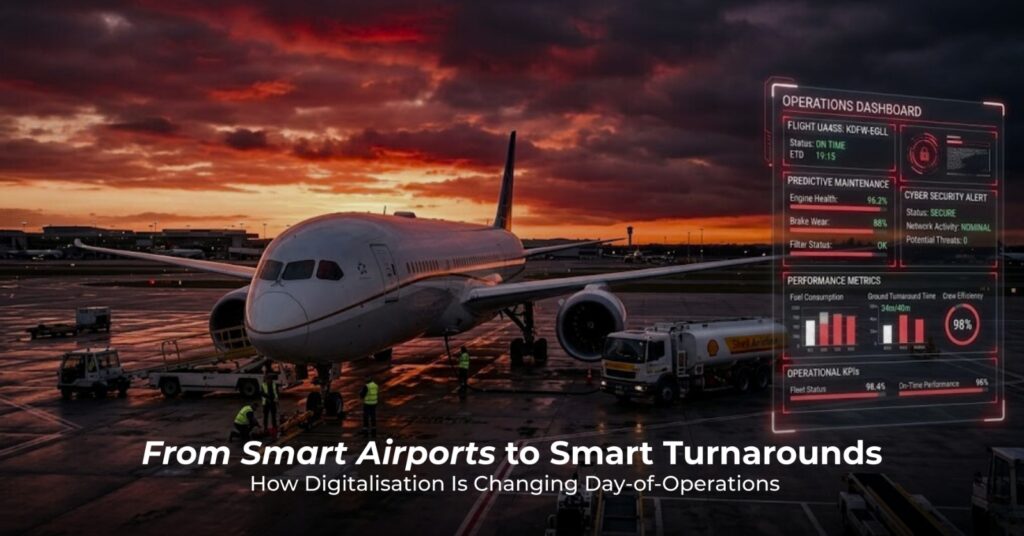
What once constituted smart airport technology like self‑service kiosks and Wi‑Fi has evolved into a deeper, data‑driven digital transformation. By 2026, airports are becoming real‑time, sensor‑rich environments that can see, predict, and orchestrate activity on the ground as effectively as in the air. This shift is not just about digitising customer touch points; it’s about integrating operations and creating systems that improve reliability, efficiency, and responsiveness throughout the entire day‑of‑operations cycle.
The most critical challenge in airport operations is the turnaround: the narrow window between an aircraft’s arrival and its next departure. Ground handling, catering, cleaning, fueling, boarding, and crew coordination all need to operate like a precision pit stop and digitalisation is the engine powering it.
This guide connects the dots between airport digitalisation trends 2026 from digital twins and AI to biometrics and real‑time IoT and what actually changes on the day of operations, especially in turnaround performance.
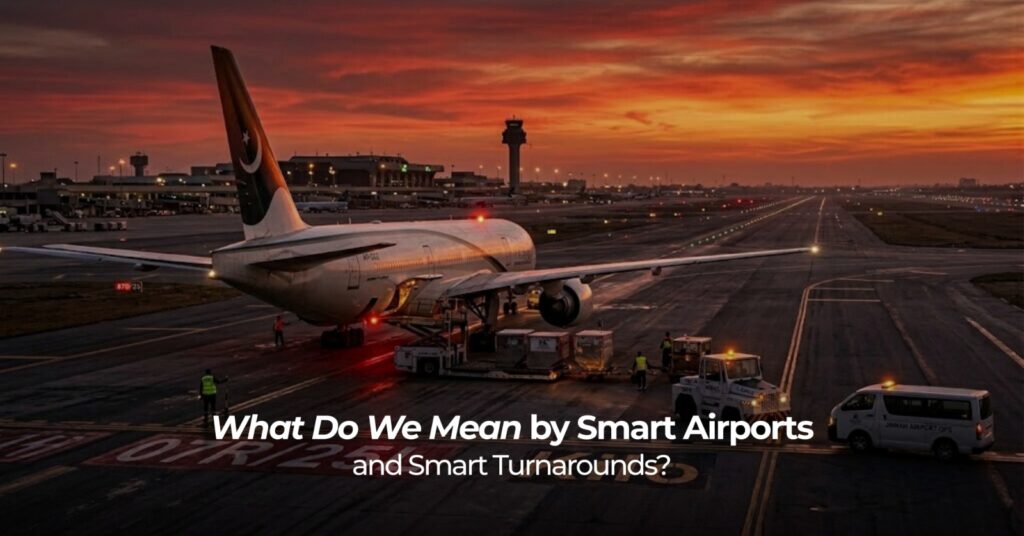
What Do We Mean by “Smart Airports” and “Smart Turnarounds”?
Smart Airports More Than Just Technology
Smart airports use interconnected digital systems AI, IoT sensors, cloud platforms, digital identities, and virtual models to break down silos between departments, provide real‑time visibility into operations, and enable predictive decisions instead of reactive firefighting.
Examples include:
- Real‑time passenger flow analytics using LiDAR and vision analytics to monitor queues and congestion;
- Digital identity systems that enable a touchless journey from check‑in to boarding;
- Digital twin models that simulate airport operations continually to optimize schedules and resources.
Smart Turnarounds The Operational Core
A smart turnaround means managing every task between an aircraft’s gate arrival and departure using digital systems:
- Real‑time timestamping of fueling, baggage, catering, and boarding;
- AI recommendations for task sequencing and resource allocation;
- Integrated dashboards for handlers, airport ops, and airlines.
Smart turnarounds minimize delays and variability, increase on‑time departures, and dramatically improve resource utilisation.
How Smart Airport Technologies Flow Down to the Turnaround
Digital Twins and Real Time Operational Views
Digital twins are virtual replicas of airport infrastructure and workflows, updated in real time with IoT sensor feeds and operational data. These twins enable simulation, scenario planning, and predictive decision making without affecting live operations.
Example Actions Enabled by Digital Twins:
- Test “what‑if” scenarios (e.g., gate changes, weather disruptions);
- Assess downstream impacts before decisions are made;
- Automatically update operational schedules and push changes to ground teams.
Innovative Technologies Shaping Future Airports,” Frost & Sullivan digital twins reduce processing times and increase situational awareness.
IoT, Sensors, and Connected Equipment
IoT networks in airports monitor equipment and asset locations (e.g., GSE vehicles, jet bridges, fuel hydrants) and feed this data into central platforms in real time.
This brings transparency to:
- Ground Support Equipment (GSE) deployment;
- Real‑time status of fueling or cargo operations;
- Early identification of bottlenecks or idle resources.
Sensors essentially replace guesswork with verified data which is essential for orchestrating tight turnarounds.
AI, Automation, and Decision Support
Artificial Intelligence analyzes real‑time and historical data flight schedules, weather, passenger boarding rates, and resource statuses to recommend optimized operational actions.
What AI Enables on the Ground:
- Predictive analysis to pre‑empt potential delays;
- Dynamic rerouting of ground teams during disruptions;
- Automated alerts for late tasks or equipment needs.
AI can also drive agentic intelligence autonomous systems that manage multi‑step workflows with minimal oversight.
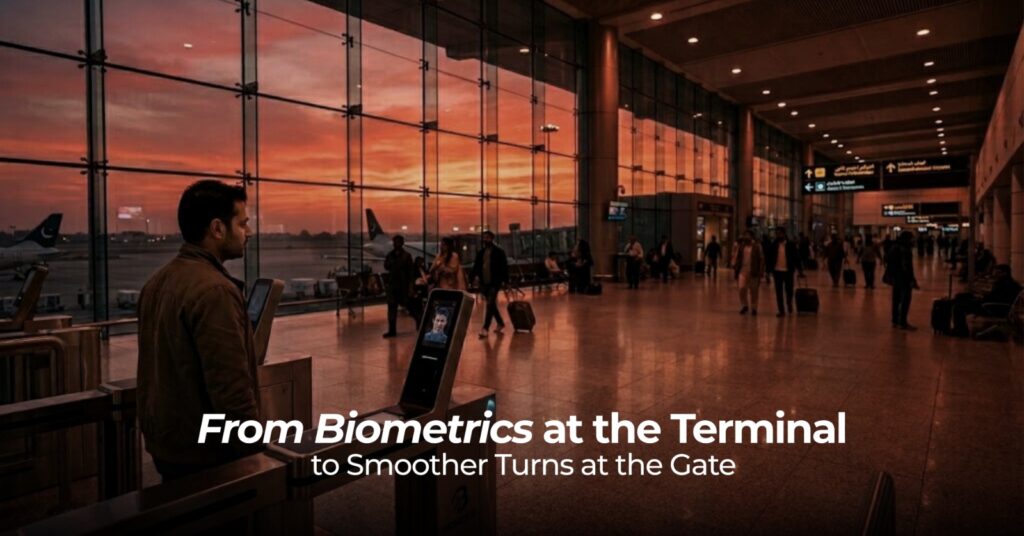
From Biometrics at the Terminal to Smoother Turns at the Gate
Digital Identity and Faster Passenger Flows
Digital identity and biometric systems are eliminating paper checks and enabling contactless journeys. Airports and airlines are increasingly adopting facial recognition, iris scans, and phone‑based identity wallets to speed up passenger movement.
Examples:
- Biometric identity wallets allow one tap to replace multiple checks;
- Contactless flow reduces queues and human intervention;
- U.S. systems are piloting eGate facial recognition to speed security checks to under six seconds.
These systems give operations teams precise timing on passenger boardings a critical input for predicting departure readiness.
What Is Digital Identity?
Digital identity in airports means electronically stored identity credentials (e.g., biometric templates) that can be authenticated throughout a passenger’s journey.
Biometric Boarding Data Feeding Operations
Biometric gates and boarding systems provide live counts of boarded passengers, no‑shows, and identity confirmations. This data feeds directly into turnaround management platforms so departure readiness is known with high accuracy, enabling better decisions for pushback timing and crew deployment.
The Digital Ground Handler: Beyond Paper and Radios
Mobile, Event‑Driven Tools
Replacing paper checklists with mobile devices lets ramp agents record events (chocks on, catering complete, baggage loaded) in real time. These event streams feed central dashboards instead of isolated radios and spreadsheets.
This eliminates ambiguity about task status and ensures all stakeholders see a consistent timeline.
Integrated Turnaround Management Systems
Turnaround management systems unify data from:
- Airlines,
- Handling agents,
- Airport operations,
- Air Traffic Control,
into a single shared operational picture. This reduces delays, clarifies responsibilities, and helps controllers prioritize interventions.
AI‑Optimised Turnaround Processes
AI engines now compare live turnaround timelines to historical performance, flagging slow tasks and suggesting corrective actions like reallocating staff or re‑sequencing workflows in real time.
Business Impact: Reliability, Cost Efficiency, and Passenger Experience
On‑Time Performance
Data‑driven operations tighten turnaround windows and reduce variability, increasing the percentage of flights departing on or before schedule.
Resource Efficiency
Visibility into real‑time data helps match staffing and equipment to true demand cutting overtime, idle time, and congestion.
Crew and Passenger Experience
Reliable schedules and smooth ground operations reduce stress, missed connections, and complaints boosting satisfaction and loyalty.
Practical Steps; From Traditional to Smart Turnarounds
Not every airport needs full digital twin implementation from day one but these steps build toward that future:
- Digitise basic milestones: Replace paper checklists with mobile tools.
- Create a single operational view: Integrate data into shared dashboards.
- Layer in analytics: Start simple and expand into predictive analytics and AI.
FAQs
Q: What are the most important technologies improving airport day‑of‑operations?
A: Digital twins for scenario testing, AI for decision support, IoT sensors and connected systems for real‑time data, and biometric/digital identities for seamless passenger flows are currently top drivers.
Q: Do airports need a full digital twin before seeing turnaround benefits?
A: No. Many airports benefit from basic digitisation (mobile checklists, shared dashboards) and analytics before deploying digital twins. Twins amplify insights but are not prerequisites.
Q: How do biometrics impact turn times at the gate?
A: Biometric systems provide precise boarding data and reduce bottlenecks at security or boarding, feeding real‑time readiness into turnaround platforms. Faster boarding reduces unpredictability in departure sequences.
Q: What is the first step for ground handlers starting digitalisation?
A: Begin with mobile, event‑driven tools that replace paper and radios, capturing timestamps and events digitally for all ground tasks.
Conclusion
Digitalisation has transformed smart airports from a buzzword into operational reality. Through technologies like digital twins, IoT, AI, and biometrics, airports can orchestrate ground operations, especially turnarounds with greater precision and resilience than ever before.
This transformation not only improves operational efficiency and cost control, but also elevates passenger and crew experiences, making every minute on the ground as intelligent as the aircraft in the sky.